Call for Papers: Language and the Creative Mind

Selected papers from the 11th Conceptual Structure, Discourse, and Language conference

We are seeking article submissions from participants in CSDL 11 for a volume of selected papers. As with previous volumes, it will be peer-reviewed and published by CSLI Publications. It is scheduled to come out in the summer of 2013.


Important dates

November 1, 2012

We are asking all prospective authors to submit a Notice of Intent, by sending an e-mail to csdl.2012@ubc.ca. Please include the author’s name/authors names and a preliminary title. This will help us approach the right set of reviewers in advance and have all submissions vetted promptly.


December 1, 2012

Paper submission due date for peer review. Please note that late papers will not be accepted, as we have a tight review and production schedule. Authors should expect to hear back from us in February.


Formatting

We have to adhere to the templates provided by CSLI Publications.  After we receive your notice of intent, we will send you specific instructions, among others on how to fit your paper into the template. If you are willing to write the paper into the template directly (which is much easier), please download Collections Style Guide part 2 at http://cslipublications.stanford.edu/site/authors.shtml. There is also a PDF sample on the page, if you’d like to view an example of a formatted text.


Submitted articles should be not more than 17 pages long, including figures, references and notes.


Topics

The volume intends to represent the overall range of topics discussed at the conference. Also, individual articles should be based on the papers actually presented. We understand that the articles submitted can deviate from presented content to some degree, but we cannot accept papers on new topics.


We look forward to your submissions,

Barbara Dancygier, Mike Borkent, and Jennifer Hinnell
Blending, Viewpoint and Deixis: Evidence from Brazillian Portuguese

Lilian Ferrari (Federal University of Rio de Janeiro)

Saturday, May 19th
Buchanan B215

Despite the identification of several categories of deixis in the relevant literature (Lyons, 1977; Levinson, 1983), it is often recognized that rigid distinctions between deictic and non-deictic usages in traditional accounts have precluded a comprehensive account of deictic data. Taking a cognitive perspective, Marmaridou (2000) proposes that deixis can be analyzed in terms of an Idealized Cognitive Model – the deictic ICM. In this view, deictic categories are assumed to be ‘radial categories’, structured by prototypical deictic terms which match perfectly well the deictic ICM, and by less prototypical members which match this ICM less well.

Going a step further, this paper proposes that the relations between prototypical and less prototypical deictic meanings are not arbitrary, but involve conceptual blending and viewpoint phenomena. The analysis focuses on person deixis, relying on Brazilian Portuguese attested data on personal pronouns. More specifically, I will discuss less prototypical uses of first person pronouns such as “eu” (I, sg.) and “a gente” (we, pl.).

The main claim is that less prototypical first person pronouns result from cross-space mappings linking two separate input spaces, which come into play due to our cognitive capacity of taking multiple viewpoints (Sweetser, 2012). It is shown that speaker and/or hearer in one input mental space, structured by the deictic ICM, may be linked to participants in a related input space, which structures a different viewpoint. These counterparts are further projected and fused in a blended space. For example, first person blended “I” can be used to fuse the speaker in the communicative exchange and the addressee in a related future space, as when a teacher takes the viewpoint of her students and says “If I want to pass the exam, I have to study hard”. Moreover, Brazilian Portuguese data shows that first person plural “a gente”, which prototypically indicates speaker and addressee(s) in the current speech event, may have blended senses in which the addressee(s) are projected from the speech event input space, but the speaker is projected from a past space.

The main contribution of the paper is to bring evidence that blending and viewpoint structure can provide a principled explanation for the enormous creativity observed in spontaneous data on deixis.

(see the attached PDF for references)

Download PDF

Nose-pointing: A facial gesture of the Yupno Valley, Papua New Guinea

Kensy Cooperrider (Case Western) & Rafael Nuñez (UC San Diego)

Friday, May 18th
Buchanan A201

How does pointing vary across cultures and what factors give rise to such variation? Despite decades of sustained interest in the human pointing gesture as a universal and primordial communicative tool, our answers to these questions remain limited. This presentation describes a previously undocumented facial gesture of Papua New Guinea, which we call nose-pointing. Based on a video corpus of more than 80 examples produced by speakers of Yupno, an indigenous language of Papua New Guinea’s Finisterre Range, we characterize the gesture’s morphology and its parameters of variation, as well as illustrate its use in different interactive contexts. Yupno speakers produce the nose-pointing form in alternation— and sometimes in conjunction— with more familiar pointing morphologies, such as the index finger extended handshape, prompting the question of whether the gesture carries a distinctive meaning. Deepening the mystery of the form’s meaning is the fact that it is also used non-deictically. We give examples of such non-deictic uses and briefly consider evidence in support of the proposal that a common semantic theme runs through both deictic and non-deictic versions of the gesture. Much remains to be understood about Yupno nose-pointing, including the full range of its uses, exactly how these different uses are related, and how it co-articulates with features of Yupno language and communicative practice. These open questions notwithstanding, the present work aims to galvanize further work on pointing practices in Papua New Guinea, where there is tantalizing evidence to suggest nose-pointing may be more widespread. After all, beyond merely adding to the gesture studies cabinet of curiosities, examples like the one described here throw light on key theoretical issues, such as the forces that shape variation and drive cultural innovation in even our species’ most foundational communicative tools.

Download PDF

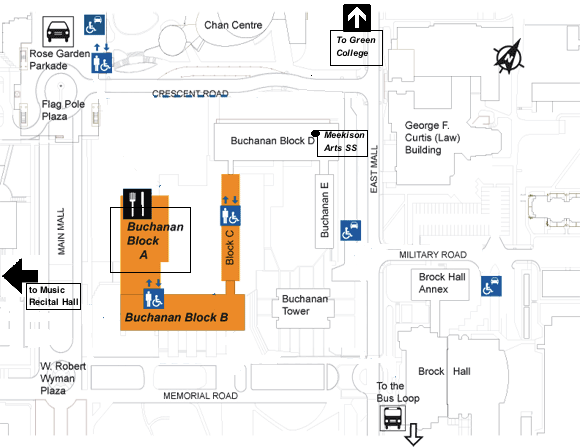
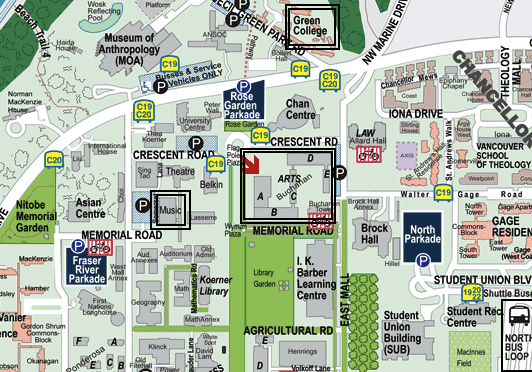
Maps to Locate Session Rooms at UBC

Area Map 1

Area Map 2

Joint attention in television news: a multimodal analysis

Francis Steen (UCLA)

Saturday, May 19th
Buchanan A201

Alongside linguistic structure, discourse incorporates multimodal dimensions of communication. The integration of language, prosody, gesture, contextual reference, and appeals to recalled and imagined events implies that communication taps into rich multimodal cognitive resources. The sustained deployment of still and moving images in culturally elaborated technologies of communication, from cave paintings to television, is a vivid testament to the power of the underlying cognitive machinery of discourse to adapt to new formats. Visual communication is at once evolutionarily novel, requiring conceptual innovation to become effective and intelligible, and at the same time necessarily grounded in, enabled by, and building on pre-existing structures. It should thus be possible to leverage our existing understanding of discourse into the languages and conventions of visual communication in art, film, television, and the internet. In addition, to the extent that technologies of communication externalize and make tangible some of the backstaged features of cognition, such a project carries in it the potential to illuminate the base case of interpersonal discourse itself.

While cognitive linguists have long appreciated that communication is multimodal, the obstacles to systematic study are formidable. A detailed investigation of the power and practice of multimodal communication requires the development not only of new corpora, but also of new tools and methodologies. The Communication Studies Department at UCLA, in collaboration with the UCLA Library, has initiated the task of assembling a large multimodal corpus of television news for research and education. The news cover important real-world events in a professional manner from multiple perspectives, permitting systematic analyses of effective communicative practices. The ongoing collection is approaching 165,000 programs from the US and other countries, including timestamped video, audio, and text. In addition, we have developed search functions, navigational interfaces for accessing video from transcripts, tools for rapid coding, and an online video analysis tool. Crossdisciplinary research teams from Computer Science, Statistics, Cognitive Science, Linguistics and Communication Studies are already working on low-level text and image parsing as well as higherlevel pattern discovery.

As a case study, I will present an analysis of how joint attention (e.g., Tomasello et al. 1993) is deployed in news reporting. I focus on the role of the anchor as a personification of the technologies of television, a role onto which the team-based techniques of visual presentation are tacitly projected. Through an examination of gesture, gaze and head direction, visual transitions, maps, and appeals to possible worlds, I present evidence that joint attention in television news is an emergent and counterintuitive conceptual blend that builds on our naive conceptions, but deploys them in a manner that is evolutionarily novel and innovative.

Download PDF

Iconic gesture production during the conceptualization and formulation of speech

Marcus Perlman, Francine G. Patterson, and Ronald H. Cohn (UCSC)

Saturday, May 19th
Buchanan B215

“Gesture and speech are operations that have been connected within. This is the sense in which they are parts of a single process” (McNeill, 1992, p.33). If gestures and speech truly are parts of a single process, then gesture production may play a role in each of stages of speech production. According to Levelt (1989), three stages are involved in speech production: conceptualization, formulation, and articulation. One hypothesis that suggests an association between gesture production and two of these stages is the Information Packaging hypothesis. This hypothesis suggests that gestures play a functional role both in the conceptual planning and the formulation of speech (Alibali et al., 2000). Long-term memory resources are thought to be necessary for conceptualization and verbal working memory resources are thought to necessary for formulation. The purpose of this study was to explore the role of iconic gestures in the conceptualization and formulation stages of speech production by assessing the relationship between iconic gesture production and memory using a narrative task.

Thirty adults participated in this study. Participants were asked to watch two short cartoons and to retell narratives from these videos as they were videotaped. Participants also completed a standardized working memory assessment designed to measure verbal short-term memory and verbal working memory capacity.

In order to investigate the relationship between iconic gesture production and the conceptualization stage of speech production, long-term memory was assessed. Narrative length is thought to be strongly reflective of memory encoding (Beaudreau, 2005). In the current study, participants were asked to watch cartoons and retell the stories, thus relying on visual information that was encoded in long-term memory. Narrative length was therefore used as a proxy measure of visuospatial long-term memory.

In order to investigate the relationship between iconic gesture production and the formulation stage of speech production, a Verbal Memory Manipulation Index (VMMI) was computed for each participant. The manipulation capacity of verbal working memory is thought to be responsible for the ordering and assembly of verbal information during the formulation stage of speech production. In order to isolate this manipulation capacity, a subtraction was conducted wherein verbal short-term memory scores were subtracted from verbal working memory scores. VMMI scores were computed for each participant. Correlational analyses revealed that iconic gesture rate was significantly associated with narrative length (r=0.563**) and VMMI (r=0.424*).

Individuals relaying longer narratives tended to use a higher rate of iconic gestures. Since narrative length was our proxy measure of visuospatial long-term memory, this finding was interpreted as lending support to the role of iconic gesture production in the conceptualization of speech. Individuals with stronger VMMIs tended to have higher gesture rates. This was interpreted as lending support to the role of iconic gesture production in the formulation of speech.

In conclusion, the results of this study lend support to the Information Packaging hypothesis and provide suggestive evidence that iconic gesture production plays a functional role in the conceptualization and the formulation of speech.

Download PDF

Criminally Insane: A Cognitive Approach to a CDA of Mental Illness

Ashley Reed (ODU)

Saturday, May 19th
Buchanan A hallway on the 2nd floor

Chilton observes that despite the best efforts of CDA, discourse continues to produce and reproduce social inequality. Although large gains have been made in recent decades, there remains a great deal of stigma surrounding mental illness. This paper aims to expose aspects of the ideology surrounding mental illness by critically examining the metaphor of mental illness as criminality in discourse through the application of conceptual blending theory (Fauconnier & Turner, 2002).

One goal of CDA is to make explicit productions and reproductions of social inequality through the identification of ideological structure in discourse. Hart (2008) argues that metaphor qualifies as ideological structure in discourse as metaphors contribute to one’s perception of reality. However, to meet the needs of CDA, an approach where the speaker is viewed as selecting metaphors is needed in analyzing metaphor in discourse. Conceptual blending theory fulfills the constraints dictated by CDA because the metaphor is grounded in discourse rather than originating at the conceptual level (Hart, 2008, p.94).

Conceptual blending theory dictates that words prompt the construction of mental spaces rather than referring to entities in the world (Fauconnier & Turner, 1996, p.113). Over the course of a discourse, networks of related mental spaces are constructed. In a blended network, such as those prompted by metaphor, there are typically four mental spaces: two input spaces, a generic space, and the blended space (Fauconnier & Turner, 2002, p.46).

Emergent structure is generated in three ways: composition, completion, and elaboration (Fauconnier & Turner, 1998, p.271). This emergent structure is significant to a critical approach to discourse. In metaphor, a type of composition termed fusion forms compound elements from the projection of two counterpart elements (Hart, 2008, p.97). With completion, relevant background knowledge is projected into the blended space. This projection is selective, however, and not all structure will be recruited from the input spaces to the blended space. Elaboration allows for further cognitive work to be accomplished according to the logic established by the blend (Hart, 2008, p.97).

The application of conceptual blending theory (Fauconnier & Turner, 2002) to the metaphors utilized in the data source for this research has revealed conceptualizations that contribute to the ideology surrounding mental illness and the mental health care system. Six tokens of metaphorical language use were identified and examined for contributions toward the construction of a metaphor. Evidence of the diminished value assigned to the treatment of mental illness was revealed as well as perceptions of the effectiveness of the modern mental health care system. Additionally, tentative indication of entrenchment for the metaphor of the mentally ill as criminals was identified. These findings are significant not only for those who are concerned with the stigma surrounding mental illness but also to the fields of cognitive linguistics and critical discourse analysis. The application of blending theory to metaphor in discourse seems fruitful and may encourage further collaboration between the two fields.

(See the attached PDF for references)

Download PDF

Creativity, gesture, and the subjunctive: how co-participants use grammar and gesture in dis/integrating multiple realities in role-playing games

Michael Sean Smith (UCLA)

Saturday, May 19th
Buchanan B213

Imagination – as a collaborative process – plays an integral part in the production and interpretation of gestures in interaction, and thus should be investigated in research on cognition and gesture. In producing gestures in interaction, producers and recipients of gestures collaboratively come to treat the body as “…a cognitive artifact” that acquires meaning “…by virtue of its relation to the spatial structure of things…” (Hutchins, 2006). This relationship, however, is also embedded in processes of collective imagining — as an embodied process — and thus requires sequential, serial, and narrative structures as well. In this paper, I will focus on the role that imagination and creativity plays in interpreting gesture, and conversely the role that gesture plays in creating an imaginary reality during a table-top role-playing game (RPG).

RPGs are rule-based games in which individuals, consisting of players and a game-master, role-play in various fantasy worlds for long-term “campaigns”. The games are phenomenologically evocative activities whereby players and gamemaster collaborate in an ordinary world so as to create an interactive narrative in a fantasy world, and in doing so, use game pieces (e.g., maps, models, figurines, dice, and manuals & rulebooks), talk, and gesture to describe, represent, and negotiate their collective imagining of the various beings, happenings, and doings of that fantastic world. The unique structure of the game and its imaginative goals present several constraints on the game-play. As a collaborative game, simple taken-for-granted concepts like “event”, “action”, or even a characterʼs percepts transform into ʻcontested objectsʼ that are discussed primarily in the potential rather than their actual. As such, most of what is discussed in the game-play rarely constitutes an actual event in the game-world. Most of what talk occurs in game-play then follows what Murphy (2004) called “action in the subjunctive…” whereby speakers discuss possible realities before settling on their agreed-to indicative reality. In this paper, I will argue, using discourse analysis, that gesture plays an integral role in the process of translating action, events, or even “being” in game-play, and that in coordination with grammar, participants use gesture seemlessly move between multiple imagined worlds.

References

Hutchins, E., 2006, Imagining the cognitive life of things. Presented at workshop, The cognitive life of things: recasting the boundaries of the mind.

McDonald Institute for Archaeological Research, Cambridge. Online at: http:// liris.cnrs.fr/enaction/docs/documents2006/ImaginingCogLifeThings.pdf

Murphy, Keith M. 2004. “Imagination as Joint Activity: The Case of Architectural Interaction”, Mind, Culture, & Activity, 11 (4), 270-281.

Download PDF

The Prosodical Son: The Influence of Music and Other Modalities on Evolution of Language

Trevor Kann (UCLA)

Saturday, May 19th
Buchanan B215

Research in the evolution of language is severely disadvantaged by its inherent lack of physical and empirical evidence. Consequently, language evolutionists must paint a picture of the development of language that complements the overall evolution of the human species. While some scholars incorporate the role of musicality and prosody into their arguments of language evolution, they often fall short of fully incorporating the necessity of both in the birth of language. As language evolved from a closed set of holistic communicative devices to an infinite and combinatorial system, music and musicality co-evolved into a complex and universal system. Just as musicality and prosody play a role in the evolution of language, other discourse resources, such as gesture, collaborated with vocalizations to form the beginnings of the symbolic representation of mutually conceived concepts that grant language.

This paper builds from the co-evolutionary notion that complex language could emerge once humans developed the capacity for symbolic thought: Symbolic thought could emerge once humans had access to symbolic devices. After reviewing various current language evolutionary theories (e.g., Bickerton 2009, Lee et al. 2009, Falk 2009, Mithen 2006), this paper explores a multimodal system of symbolic development with particular focus on musicality, intonation, and gesture. The simultaneity of multi-modalities makes the use of minimal pairs possible, which can isolate a word, intonational contour, or gesture for mutually agreed upon meaning across speakers. While words have won the evolutionary battle and emerged as the most productive linguistic symbolic device, this paper argues that the emergence was necessarily multimodal.

(See the attached PDF for references)

Download PDF

Modeling the Transformation of Conceptual Spaces using a Quantum Model of Concept Combination and the Notion of Self-organized Criticality

Liane Gabora (UBC)

Friday, May 18th
Buchanan B213

Most thoughts and experiences have little effect on our worldviews. However, the occasional thought or experience triggers another, which triggers an ‘avalanche’ of conceptual change, resulting in massive restructuring of conceptual space. The restructuring that occurs during insight is modeled using (1) a theory of concepts of concepts that makes use of a generalization of the formalism of quantum mechanics, and (2) the notion of self-organized criticality.

Quantum Approach to Concepts. It is widely believed that concept combination plays a key role in creative insight (Estes & Ward, 2002; Mobley, Doares, & Mumford, 1992; Mumford, Baughman, et al., 1997; Ward, Smith & Finke, 1999). However, concepts, like quantum entities, interact in ways that are non-compositional; i.e., people use conjunctions and disjunctions of concepts in ways that violate the rules of classical logic (Hampton, 1987; Osherson, & Smith, 1981; Aerts, 2009; Kitto, Ramm, Sitbon, & Bruza, 2011). This is true both with respect to properties (e.g., although people do not rate ‘talks’ as a characteristic property of PET or BIRD, they rate it as characteristic of PET BIRD), and exemplar typicalities (e.g., although people do not rate ‘guppy’ as a typical PET, nor a typical FISH, they rate it as a highly typical PET FISH). These effects have made concepts highly resistant to mathematical description. The quantum formalisms were designed to model phenomena that violate the rules of classical logic in the micro-realm: extreme contextuality (the observer effect), and non-compositionality (entanglement). Generalizations of these formalisms do an excellent job of capturing the contextuality and noncompositionality exhibited in studies of how humans use concepts (Gabora & Aerts, 2002, 2009; Aerts & Gabora, 2005a,b; Aerts, 2009; Kitto, Ramm, Sitbon, & Bruza, 2010; Kitto, Ramm, Bruza, & Sitbon, 2011).

Self-organized Criticality. Complex systems tend to self-organize into a critical state poised at the cusp of a transition between order and chaos, from which a single small perturbation occasionally has a disproportionately large effect (Bak, Tang, & Weisenfeld, 1988), a phenomenon referred to as self-organized criticality (SOC). A wellknown example of this phenomenon in biology is provided by punctuated equilibrium, and similar effects have been identified in earthquakes and stock market dynamics. Noting that large-scale conceptual change and insight often occurs suddenly following a series of minor conceptual changes, it has been proposed that SOC also plays a role in creativity (Ward, Smith, & Vaid, 1997; Gabora, 1998; Schilling, 2005).

Insight. Much as most perturbations in SOC systems have little effect, but the occasional one has a very large effect, most thoughts have little effect on the knowledge, experiences, attitudes, and so forth that constitute an individual’s internal model of the world, or worldview. However, the occasional thought triggers another, which triggers another, which triggers an ‘avalanche’ of sequential changes resulting in a massively restructured worldview. Thus insight is modeled as a series of self-triggered ‘conceptual collapses’.

(See the attached PDF for references)

Download PDF