Cognitive Neuroscience of Creative Language

Seana Coulson (University of California, San Diego)  
Saturday, May 19th 

Creative language is an internally diverse, fuzzy-edged family of phenomena, relying on brain processes similar to those involved in literal language. I describe experimental studies of how people understand different sorts of creative language phenomena, including both literal and figurative language. These data argue for a dynamic, context-sensitive language processor that exploits conceptual integration, or blending processes capable of handling a diverse array of figurative language. I go on to present a model of multi-modal discourse comprehension in which speakers utilize conceptual integration processes to combine linguistic information with visual-spatial and motoric information made available through gestures. I describe a number of event-related brain potential (ERP) studies that support the model, and consider the claim that artistic creativity is rooted in processes underlying multi-modal discourse comprehension.

This song has a wiggle in the middle

Rena Sharon and Eric Vatikiotis-Bateson (University of British Columbia)  
Thursday, May 17th 

Biological organisms naturally engage in coordinated behavior. Highly skilled behaviors such as spoken communication, singing, or playing a musical instrument exploit this truism to attain more intricately organized and more controlled coordination. So, for example, the basic tendency for two people walking side by side to fall into step with each other can be modified into a highly synchronized march or tango. The fluidity and beauty of such actions depends on sophisticated engagement by the performers for whom the outcome has become a coveted goal rather than a merely comfortable occurrence. The performance of a highly skilled piece of music requires that substantial cognitive, neuromotor, and metabolic resources be marshalled and carefully integrated. The result is more impressive than casual coordination, and more fragile. For example, a minute change in timing that would go unnoticed for two people walking in step can become a glaring performance error in music or song. What’s more, once a behavior becomes a desired outcome, it becomes susceptible to aesthetic interpretation whereby one instance of a performance can be preferred to another. While this is useful in training, it also stylistically constrains the performance to be one way rather than another; in other words, a form emerges that, even if arbitrary from the perspective of any known causal factors, suppresses other forms as different and/or undesirable.

For the past several years, we have taken a multi-pronged approach to understanding how coordination within and between performers contributes to the execution of over-learned expressive behaviors. In this talk, we focus on the particularly rich domain of Art Song in which a pianist and a singer must bring to life a work of art that consists of a poem and a piece of music written for that poem. The task for the Art Song duo is daunting because the audience often has no prior experience with the poem (and increasingly with poetry in general) and therefore has only fleeting access as the piece is performed. To make matters even more complex, over time performance style has become constrained in ways that do not make much sense to modern audiences, thus challenging the final coordination link between performers and audience. We present results of our converging efforts as scientist and musician 1) to modify performance style to better connect with audiences, including expanding the range of the singer’s body motions and introduction of more tangible dramatic devices such as a silent player representing the intended recipient of the song, and 2) to provide quantitative support for these modifications through analysis of the coordination between a singer’s voice and body motion and between the acoustics of the voice and the piano. Finally, we do not at present have the facilities to record the data for quantifying the coordination between musicians and audience; however, we exemplify how such an analysis could be done using our coordination analysis of the rock group, Queen, and a large audience of 72,000.

Early Registration is Now Open

You can now register for the 11th Annual CSDL Conference. Early registration closes on April 1st, 2012.

Register here: https://csdl2012.sites.olt.ubc.ca/registration

Please fill out the form completely and click “Confirmation & Payment,” which will direct you to the payment gateway. You will receive a receipt by email as confirmation.

CFP Deadline Extended

The CFP submission deadline for CSDL 11 has been extended to December 16th, 2011. The submission form closes at 11:59pm, so be sure to get your abstract in before then!

Please submit your abstract via our online form: https://csdl2012.sites.olt.ubc.ca/submit-an-abstract/

About UBC

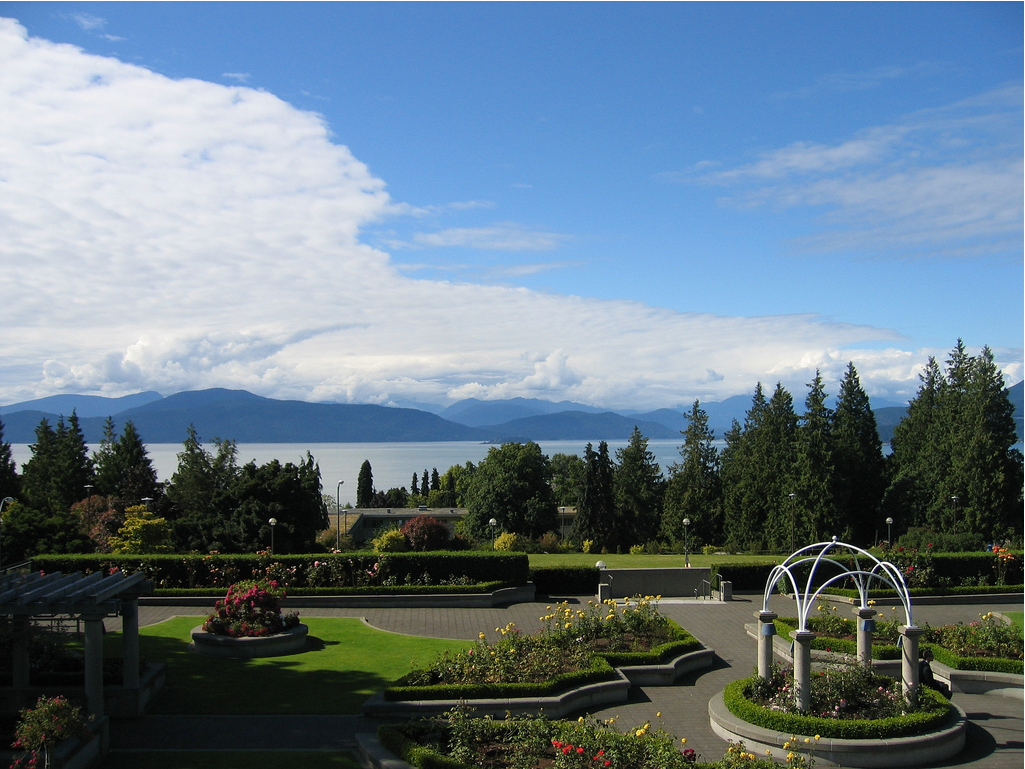
UBC Rose GardenThe University of British Columbia’s Vancouver campus is located at the western tip of the Point Grey Peninsula in the city of Vancouver in British Columbia, Canada. More than 400 hectares in size, the stunning campus is surrounded by forest on three sides and ocean on the fourth, and is just a 30 minute bus ride to Vancouver’s downtown core. The campus has been located on this site for most of its 100-year history; a location that is the traditional territory of the Musquem people. The campus also has two additional sites, one in the heart of downtown Vancouver at Robson Square, and another at Great Northern Way.

Around Vancouver

Vancouver

Check back here for a list of local’s favourites!

Museum of Anthropology

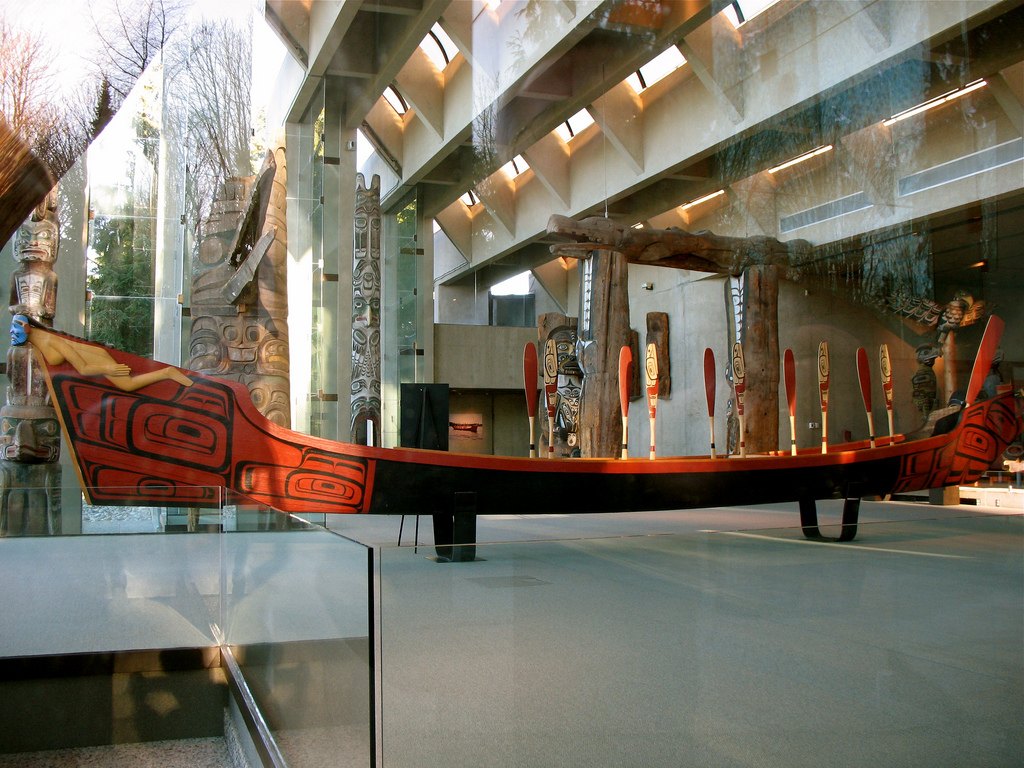
MOAVancouver’s Museum of Anthropology was founded in 1949 in the basement of the Main Library at the University of British Columbia. Today, Canada’s largest teaching museum is located in a spectacular building overlooking mountains and sea – its collections, exhibitions and programs renowned for giving access and insight into the cultures of indigenous peoples around the world.

The Museum houses over 38,000 ethnographic objects and 535,000 archaeological objects, many of which originate from the Northwest Coast of British Columbia. Massive totem poles, carved boxes, bowls, and feast dishes are featured in the Museum’s Great Hall, while smaller (but no less magnificent) pieces in gold, silver, argillite, wood, ceramic, and other materials are exhibited elsewhere in the galleries.

MOA’s Multiversity Galleries provide public access to almost 10,000 objects from around the world, and The Audain Gallery, MOA’s new 5,800 sq ft temporary exhibition hall, showcases world-class traveling exhibits as well as those developed in-house.

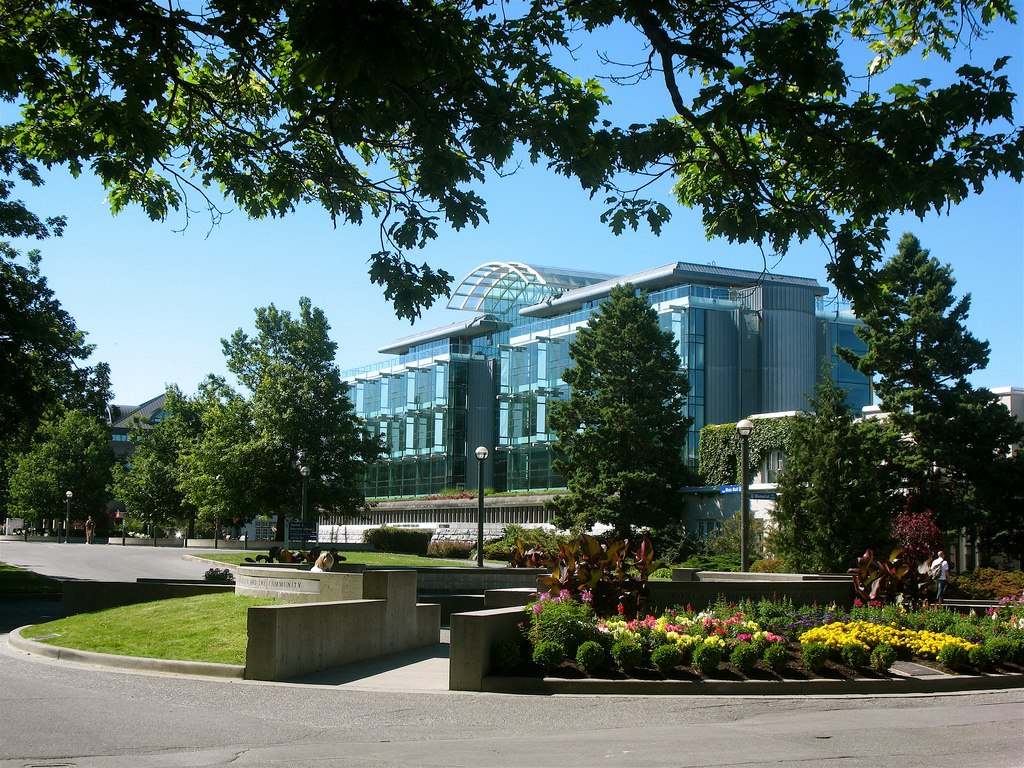
Koerner Library

Design: ArchitecturKoerner Librarya in collaboration with Arthur Erickson
Official opening:
March 10, 1997
Area: 17,200 square metres

Capacity of stacks: 800,000 volumes
Study space: 920 individual carrels, plus rooms for group study
Cost: $24 million dollars

In 1991, the area immediately to the west of the underground Sedgewick Undergraduate Library was confirmed as the site for Walter C. Koerner Library.

Construction began in January 1995. Sedgewick/Koerner continued to operate, maintaining most library services. The two underground floors of Sedgewick were renovated and upgraded to current library and safety standards. These two levels were extended on the west to become the base of the new construction between Old Administration, Mathematics, and the Math Annex.

The Walter C. Koerner Library opened officially on March 10, 1997. The new construction extends five stories above the level of the mall. The new design, while classical in order and structure, is modern in material and technology, with a central entry on axis with the Main Library and a tripartite vertical organization into base, body, and attic.

The base is composed of a battered granite wall, complementing the materials of the Main Library. The granite is from the same quarry as the granite used on the Main Library. There is a course of clerestory windows and a continuous planter above.

On the front façade, the three mid levels are sheathed in a flush plane of glass shielded by a system of external glass screens. The transparency of these levels allows the building to ‘read’ as a library and permits the maximum amount of appropriately screened daylight into the building.

Level seven, the classical attic, is set back from the levels below. This level is finished in a sloping natural zinc roof. Zinc is a soft grey material that weathers and ages well. This is also the major material of the side elevations.

The back façade is clad in stucco with a grid of diamond-shaped windows. The central nave is top-lit by a shallow vault of translucent glass.

Walter C. Koerner Library totals 17,200 square metres: 7,000 square metres of new construction and 10,200 square metres of renovated space from Sedgewick Library.

Functions within the building are composed of 54% for collections (6,420 shelving units for an approximate total of 800,000 volumes), 25% for service and offices, and 21% for 920 study spaces.

Funding was through donations to UBC’s World of Opportunity Campaign, with matching funds from the provincial government and the President’s discretionary funds. It is named in honour of Walter C. Koerner, recognizing his lifetime commitment to and support of the University and the Library and his substantial gift toward the construction of Koerner Library.

Abstract Submission is Now Open!

You can submit an abstract for the 11th Conceptual Structure, Discourse, and Language Conference by clicking on the “Submit an Abstract button” on the sidebar or following the link below:

https://csdl2012.sites.olt.ubc.ca/submit-an-abstract/

The deadline for abstracts is: December 9th, 2011